Velvet sofa cleaning asks for a lighter touch than an ordinary fabric sofa. The safest approach is to remove dry dust gently, blot fresh spills without rubbing, use as little moisture as the care label allows, and keep every stroke moving with the pile. Over wetting or scrubbing can leave a dull, flattened patch that may never fully recover.
Why Velvet Needs Extra Care in Lahore Homes
Velvet sofas are a familiar sight in Lahore drawing rooms, particularly in deep green, navy, maroon, beige and grey sets. They look rich because thousands of short upright fibres catch the light. That same beauty is why an enthusiastic DIY clean can turn one armrest or one seat cushion into a permanently darker, rougher patch. The rule is simple. Velvet should never be treated like a standard polyester sofa fabric.
Learn the Pile Direction Before You Start
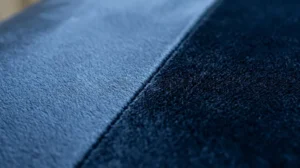
The pile, sometimes called the nap, is the layer of short fibres standing on the surface of velvet. When those fibres lie in one direction, light reflects evenly and the sofa looks smooth. Brush them the other way and the same fabric can appear darker, lighter or streaky.
- Run a clean, dry hand gently over a hidden section of the sofa.
- The direction that feels smoother is usually the way the pile lies.
- The direction that feels slightly rough is against the pile.
Your blotting, brushing and final grooming should follow the smoother direction. Do not judge the pile direction by colour alone, since velvet can look different from every angle, especially under LED lights or sunlight coming through a drawing room window.
Mistakes That Cause Lasting Damage
Most permanent marks on a velvet sofa come from good intentions applied the wrong way. These are the habits to avoid.
- Rubbing a fresh spill with a cloth or brush
- Soaking the fabric to flush out a stain
- Ignoring the care label under the cushions
- Steam cleaning without knowing the fibre type
- Vacuuming with too much suction or the wrong attachment
- Treating only one small spot aggressively
Rubbing a Fresh Spill With a Cloth or Brush
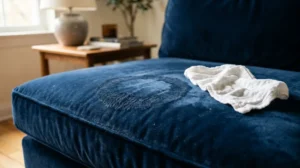
A tea splash, a grease mark or a child’s juice spill can make anyone panic, and the common reaction is to scrub fast. Rubbing twists and mats the pile, and it can push the stain further into the backing and spread it beyond its original edge. Once the fibres dry in conflicting directions, the area can look permanently dull even after the stain itself has faded. Place a clean white absorbent cloth on the spill, press down lightly, lift, and repeat with a dry part of the cloth. Avoid circular motions and avoid coloured towels, since dye transfer is an unnecessary risk on pale velvet.
Soaking the Fabric to Flush Out a Stain
Velvet can look dry on the surface while water has already travelled down through the pile to the backing, foam, stitching or timber frame. This can leave a visible ring, cause the pile to dry clumped or pressed flat, and leave cushion filling damp long after the surface appears dry. Manufacturer guidance often warns against wetting or saturating velvet, since viscose pile in particular can be damaged this way. This matters during Lahore’s humid monsoon months, when a heavily wet sofa takes far longer to dry in a closed room. Use the smallest possible amount of cleaning solution, keep the cloth barely damp, and never spray cleaner directly onto the sofa.
Ignoring the Care Label
Before applying water, foam, solvent, vinegar or any stain removal product, check under the seat cushions for the upholstery cleaning code. The code is guidance rather than a guarantee, and fibre content still matters. Polyester velvet is usually more forgiving than viscose, cotton, silk or older velvet, though none of these should be scrubbed or saturated. If the label is missing, treat the sofa as high risk until a professional has assessed it.
| Care code | What it usually means | Safer homeowner action | What to avoid |
|---|---|---|---|
| W | Water based cleaner may be suitable | Test a hidden area first, then use minimal moisture | Soaking cushions or spraying the sofa |
| S | Solvent based cleaning only | Dry vacuum, and call a specialist for stains | Water, steam and wet shampooing |
| WS | Water or solvent based products may be suitable | Test discreetly and use very little product | Assuming every cleaner is safe |
| X | Vacuum only | Soft upholstery vacuum attachment | Water, solvents, shampoo and steam |
Steam Cleaning Without Knowing the Fibre
Steam is often marketed as a universal refresh, but heat combined with moisture is a poor match for many velvets. On unsuitable fabric, steam can distort the pile, create water marks, affect natural fibres or press the surface flat. Some synthetic velvet may tolerate carefully controlled professional treatment, but that does not make a home steam cleaner safe for every sofa. If your sofa is viscose, silk, antique, unlabelled, already marked or has an expensive tufted design, skip the DIY steam attempt and call a specialist.
Vacuuming With Too Much Suction or the Wrong Attachment
Dust and grit settle between velvet fibres, and leaving that debris in place lets it act like fine sand once people sit down, wearing the pile over time. Regular dry maintenance helps, but the method matters. Use a clean upholstery attachment or soft brush attachment at low suction, keep the nozzle moving, avoid pressing hard into the fabric, and always brush or vacuum in the direction of the pile.
Treating Only One Small Spot Aggressively
Spot cleaning suits a fresh spill, but aggressively treating only a patch the size of your palm can leave a clean looking circle around the original mark, a water halo, or a noticeably different pile direction. If a stain needs a wet process, work carefully at the edges and avoid over saturating. For a large stain, an uneven old mark, or repeated marks on one seat, a specialist assessment is safer than adding more product at home. This matters especially in rented furnished homes, where a flattened patch can create a dispute when the property is returned.
A Safer Way to Respond
Whatever the situation, working through the same sequence keeps a small mark from becoming a permanent one.
| Step | Action | Why it matters |
|---|---|---|
| 1 | Identify what you are dealing with | A fresh spill, dry dust, pet hair and an old stain each need a different response |
| 2 | Check the care label under the cushions | Prevents using water or solvent on a fabric that cannot tolerate it |
| 3 | Blot spills or vacuum gently with minimal moisture | Stops rubbing and over wetting from matting or flattening the pile |
| 4 | Stop as soon as a ring or flat patch appears | Adding more product to an already marked area usually makes it worse |
| 5 | Book a professional assessment when in doubt | Specialist testing avoids permanent texture damage on delicate fabric |
When to Call a Professional
DIY care is fine for dry dust, loose crumbs and a very fresh spill that can be blotted without adding liquid. Professional help is the safer choice in several situations.
- The sofa is marked S or X, or has no readable label
- It is viscose, silk, cotton, antique or premium designer velvet
- There is a large tea, coffee, oil, urine, ink, makeup or dye stain
- A water ring, stiff patch or visibly flattened pile has appeared
- There is pet odour, allergy concerns or dampness reaching the cushion filling
- You need a whole suite cleaned with even colour and pile across every piece
A reputable technician should inspect the fabric first, identify the care code and likely fibre, choose a low moisture method where appropriate, test a hidden section, and explain the realistic outcome before starting work. Never accept a blanket promise that one shampoo or steam method suits every sofa material.
Get Your Velvet Sofa Assessed by Pak Cleaners
Pak Cleaners can assess whether your velvet needs dry maintenance, controlled low moisture cleaning, or referral to a specialist process for delicate fabric. Send clear photos of the full sofa, the stain, the care label and your area in Lahore for a quote.
