If you’re pricing out dewan cleaning in Lahore, you’ll usually see numbers somewhere between Rs 1,200 and Rs 1,500 for a standard piece. That’s a fair starting point, but it’s not the whole story. What you actually pay depends on the dewan’s size, the fabric it’s covered in, how much dust and staining has built up, whether it has loose cushions, and which cleaning method the job calls for.
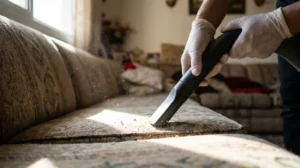
A proper service isn’t just someone showing up with a vacuum and a bottle of shampoo. It should include an inspection, thorough vacuuming, fabric appropriate treatment, extraction or washing where that’s safe, and enough drying time and airflow afterward.
Why dewans need more than a quick wipe down
A dewan can look perfectly fine from across the room while still holding a shocking amount of dust in the fabric, the seams, and the cushions. In Lahore, open windows mean road dust and smog settle onto drawing room furniture pretty much every single day. Add in normal use, sitting, sleeping, family get togethers, and you’ve also got body oils, food marks, and the occasional spilled drink working their way into the fibers.
Many traditional dewans are filled with cotton or foam, and that changes how you clean them. Too much water soaks into that filling and dries slowly. If it stays damp for too long, you end up with a musty smell, especially during monsoon season when humidity already makes everything take forever to dry.
Cleaning handles the everyday grime and odours well. What it won’t do is repair torn fabric, bring back faded colour, or erase every stain that’s been sitting there for years. A cleaner worth hiring will look at the material first and tell you honestly what’s realistic before starting.
What dewan cleaning typically costs in Lahore
The prices below reflect general market rates seen across Lahore right now. They’re not a fixed quote, and you should always ask for a final price once you’ve shared photos, rough measurements, and a description of the dewan’s condition.
| Cleaning requirement | Typical Lahore price | What changes the quote |
|---|---|---|
| Standard single dewan | Rs 1,200 to Rs 1,500 | Size, fabric type, and dirt level |
| Large or heavily soiled dewan | Above the standard rate | Embedded dust, grease, and multiple stains |
| Dewan with several cushions | Extra charges may apply | Number and size of cushions |
| Sofa cum bed | Around Rs 1,450 in typical listings | Mechanism, mattress area, and fabric |
| Complete sofa set plus dewan | Custom quote | Total seats, access, and drying needs |
Rates across Lahore mostly cluster around Rs 1,199 to Rs 1,499 for a standard dewan. That said, similar prices don’t always mean similar work. It’s worth comparing what’s actually included in the service rather than just picking whoever quotes the lowest number.
What a proper cleaning process should include
1. Inspection and fabric testing
A cleaner should check the fabric, the seams, the filling, and any old repairs before touching anything else. A small hidden patch usually gets tested first for colour bleeding or transfer. This step matters a lot for dark cotton covers, velvet, printed fabric, and older upholstery that’s already seen better days.
If colour runs during that test, the team will likely switch to a lower moisture method. That’s the safer route, though it may not lift deeply set dirt as aggressively as full wet extraction would.
2. Dry vacuuming first
Vacuuming always comes before any liquid touches the fabric. It clears loose dust, hair, and grit from the surface and from tight crevices. Skip this step and you risk turning dry dirt into muddy residue the moment water or detergent gets applied.
For homes near busy roads or construction sites, extra attention goes to the piping, the lower edges, and the gap underneath cushions. Those spots often collect more dust than the seat itself does.
3. Spot treatment for stains
Tea, soft drinks, cooking oil, ink, and kids’ stains all need different treatment, not one generic chemical sprayed on everything. Older stains may have already oxidised and permanently shifted the fibre’s colour, which makes full removal unlikely no matter what’s used.
Good cleaners avoid aggressive scrubbing. Hard brushing roughens the fabric, spreads the mark further, or weakens a seam that was already fragile. If someone, a landlord, a buyer, a family member, is expecting a specific stain to vanish completely, take photos before the work starts and ask upfront what’s actually achievable.
4. The main clean
The method used depends entirely on the material and its current condition. Some fabrics handle controlled shampooing or extraction just fine. Others need a low moisture approach to avoid shrinkage, colour bleeding, or staying damp for days.
Hard water is another factor worth knowing about. Repeated washing with hard water can leave mineral residue behind, especially when fabric dries slowly. Water hardness varies quite a bit across different parts of Lahore, with some areas testing as hard or very hard by standard classification. That’s exactly why moisture control matters, and why detergent shouldn’t be left sitting in the fabric.
5. Drying and the final check
Drying isn’t an afterthought, it’s part of the job. Keep windows open when outdoor air quality allows it, run fans if you have them, and don’t cover the dewan until it’s completely dry. If load shedding is likely, mention it to the booking team beforehand so they can plan around it.
Drying stretches out during monsoon weather or when the dewan has thick cotton filling. Whatever you do, don’t sit or sleep on it while it’s still damp. That compresses the filling, traps odour inside, and slows evaporation even further.
Quick heads up before you book
Dust and smog mean heavy vacuuming may be needed before any wet cleaning starts. Hard water marks sometimes need separate treatment and might not fully disappear from fabric that’s already faded. Monsoon season calls for earlier bookings and better airflow planning. If you have pets, mention hair, odour, or scratching upfront since that often means extra work. Renters should photograph the dewan beforehand and keep the invoice, especially if cleaning is happening before a handover. And if you’re prepping for Eid, don’t leave it until the last day, drying and stain treatment usually take longer than people expect.

DIY or call a professional
DIY cleaning works fine for light dust or a small, recent spill, assuming the fabric label allows water based treatment. It’s cheaper, sure, but home equipment usually can’t pull out enough moisture. Use too much detergent and you’ll end up with a sticky residue that just attracts more dust down the line.
Professional cleaning makes more sense when the dewan is large, heavily soiled, hard to move, or made from something delicate. Even then, there are limits. No cleaner worth trusting will promise that every old stain, smell, or faded patch is going to disappear completely.
Booking an inspection with Pak Cleaners
Before asking for a quote, send photos of the full dewan, close ups of any stains, the cushions, and the route the team will need to access it. Ask whether the price includes cushions, stain treatment, drying guidance, and any travel or extra item charges, so there are no surprises once the work is done.
