Tackling dust mites in mattress padding across Lahore requires high temperature steam sanitization. In fact, the steam must rise above 60 degrees Celsius to be effective. Technicians also combine this thermal process with industrial HEPA vacuum extraction.
Surface dusting and domestic wiping cannot dislodge these microscopic pests. They burrow deep into dense quilting and foam cores. Consequently, our local climate accelerates their growth through heavy dust storms, seasonal monsoon humidity, and dense winter smog.
Every night, an adult sheds roughly one gram of dead skin cells. In addition, sleepers release nearly half a liter of body perspiration. In an enclosed bedroom, this warmth and moisture creates an ideal biological breeding zone. Therefore, getting rid of them requires targeted mechanical extraction rather than basic home dusting.
Sleeping on an infested mattress exposes your lungs to thousands of concentrated allergen particles. Standard household vacuums barely scratch the surface. As a result, domestic machines often blow dust back into the room air. True decontamination demands specialized mechanical suction, calibrated heat, and rapid drying tools. For this reason, scheduling certified professional cleaning services in Lahore ensures that your sleeping environment receives the deep mechanical care required to restore indoor air purity.
The Hidden Biological Colony Inside Your Mattress Foam
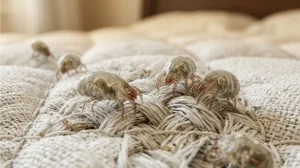
Dust mites are known biologically as Dermatophagoides pteronyssinus. These tiny arachnids measure barely one third of a millimeter across. Because of their microscopic size, you cannot spot them with the naked eye. They do not bite human skin, and they do not suck blood. Likewise, they do not transmit infectious diseases between family members.
The primary health trouble comes from their digestive bio waste. Mites produce microscopic fecal pellets loaded with active digestive enzymes. Specifically, the Der p 1 and Der f 1 proteins trigger severe allergic responses. According to published clinical research from the World Allergy Organization, these enzymes degrade protective mucosal cells in human airways.
Deep extraction cleaning does not cure chronic respiratory illnesses like asthma. However, published allergen management studies demonstrate that sustained allergen reduction substantially lowers nighttime bronchial triggers. Consequently, removing this waste eases daily breathing discomfort and promotes deeper sleep.
How the Climate and Smog of Lahore Accelerate Infestations
Lahore provides ideal breeding conditions for these arachnids throughout the entire year. Dust mites thrive when ambient relative humidity stays between 65 and 80 percent. In addition, they prefer moderate room temperatures between 20 and 25 degrees Celsius. When indoor air stays within this window, their reproduction rates surge dramatically.
During July, August, and September, the monsoon rains push indoor humidity across Punjab well above these thresholds. Even during the scorching summer heatwaves of May and June, families run inverter air conditioners set around 24 to 26 degrees Celsius. That practice keeps bedroom air cool while body perspiration remains trapped right inside the mattress padding.
Our geographic basin adds another severe environmental challenge. From October through January, low wind speeds and agricultural burning trigger severe smog across the city. Fine particulate matter slips past window joinery and settles on bed covers. Because of this, booking routine professional window and glass cleaning in Lahore helps eliminate the heavy soot crust that builds up along exterior tracks, preventing settled pollutants from blowing inside every time a window is opened.
Seasonal Smog and Spring Pollen Infiltration
During peak smog months, fine chemical particulates bond with dead skin flakes. This mixture forms a dense organic crust on bed covers. Dust mites consume this protein rich debris without difficulty. Consequently, the pests multiply faster during winter inversions than in dry, warm spring conditions.
The seasonal transition into spring also brings high airborne pollen counts. Specifically, paper mulberry trees across central districts release clouds of fine yellow powder. When heavy pollen dust mixes with indoor mite allergens, the combined biological load inside your mattress fabric severely compromises indoor bedroom air quality.
In addition, unsealed brick masonry and concrete structures common across local housing developments absorb moisture during heavy rain downpours. This trapped dampness slowly migrates into interior walls. Consequently, it elevates relative bedroom humidity and creates localized microclimates where mite colonies multiply without interruption.

Field Observations from an Experienced Cleaning Supervisor in Lahore
Working on residential hygiene crews across Lahore reveals distinct environmental patterns in different neighborhoods. A modern villa in DHA Phase 6 faces completely different moisture and dust problems than an older brick bungalow in Model Town or a family flat in Johar Town.
In DHA Phase 5, Phase 6, and Phase 8, numerous homes feature finished lower ground basements. Families often use these subterranean suites as guest rooms or home theaters. However, these lower ground rooms lack natural cross ventilation and sit surrounded by damp soil. Thus, they maintain an ambient relative humidity that frequently tops 75 percent.
Mattresses placed in these basements absorb dampness like giant sponges. When our technicians test these beds before treatment, the damp foam core almost always yields elevated dust mite allergen concentrations. Therefore, basement bedrooms require twice the extraction frequency of upper floor rooms.
Construction Dust and Heavy Traffic Corridors
Homes near the Ravi riverbed and open development zones in Bahria Town, Park View City, and newly built sectors face intense particulate ingress. Fine sand and cement dust blow through sliding aluminum window tracks during afternoon wind gusts. This abrasive grit penetrates outer damask mattress covers, cutting into delicate quilting fibers and holding dead skin cells in place.
In older Cantonment residences with twelve foot ceilings, vintage ceiling fans constantly whip settled dust particles downward onto open bedding. When domestic staff attempt to clean these beds by wiping them down with wet rags or buckets of untreated bore water, the high mineral salts in Lahore groundwater leave chalky yellow rings on the fabric. That excess water sinks deep into the inner spring pockets, creating hidden mildew pockets that take days to dry.
Denser urban residential quarters such as Gulberg, Faisal Town, and Ichhra present compact sleeping spaces where multi generational families spend extended hours indoors. Beds in these homes serve as reading zones, study desks, and children lounging areas throughout the day. This intensive daily use multiplies human skin shed rates, resulting in heavy biological buildup within the top two inches of comfort padding.

Clear Warning Signs Your Bedding Fabric is Colonized
Because dust mites remain invisible to human sight, homeowners must watch for subtle physical indicators and chronic morning symptoms. If your bed shows two or more of the following signs, the internal padding has accumulated heavy allergen concentrations:
- Chronic Morning Congestion: Waking up with stuffed nasal passages, watery eyes, an itchy palate, or repetitive sneezing fits that clear up thirty minutes after stepping out of the bedroom.
- Nocturnal Skin Itching: Experiencing prickling sensations, unexplained red patches, or eczema flareups along the neck, inner elbows, and thighs without any distinct puncture marks.
- Stale Biological Odor: Noticing a faint, sweet, musty smell when you press your face into the pillowtop, created by decomposed dander, sweat salts, and bacterial activity. When odors become pervasive, pairing bed extraction with targeted specialized odour removal and sanitisation in Lahore thoroughly neutralizes lingering airborne volatile compounds.
- Dull Fabric Discoloration: Seeing cloudy yellowish halos and brownish sweat stains along the center line of the mattress where personal perspiration has soaked through mattress pads.
- Aggravated Nighttime Coughing: Waking from shallow sleep due to dry tickles in the throat caused by breathing disturbed dust particles during tossing and turning.
- Persistent Restless Tossing: Feeling unable to settle into restful deep sleep due to subtle skin irritation and shallow upper airway resistance throughout the night.
Mattress Deep Cleaning and Restoration Matrix for Lahore Homes
Restoring a contaminated mattress requires calibrated equipment matched to the size of the house, occupancy load, and seasonal dust exposure. Below is our operational matrix outlining recommended cleaning frequencies, technical machine specifications, and real market pricing across standard Lahore property configurations.
| Property Configuration | Bed Inventory | Treatment Frequency | Technical Machine Specs | Average Cost in PKR |
|---|---|---|---|---|
| 5 Marla Residence | 2 to 3 Mattresses (Master and Children) | Every 6 Months | 130 CFM suction, 120 PSI pump, 65 C steam vapor | Rs. 3,500 to Rs. 5,500 |
| 10 Marla Residence | 3 to 4 Mattresses (King and Queen Units) | Every 4 to 6 Months | 200 CFM suction, 150 PSI pump, pH 7.5 prespray | Rs. 6,000 to Rs. 9,000 |
| 1 Kanal Residence | 4 to 6 Mattresses (Multiple Suites) | Every 3 to 4 Months | 220 CFM dual vacuum, 180 PSI injection, thermal steam | Rs. 9,500 to Rs. 15,000 |
| 2 Kanal Estate | 6 to 8 Mattresses plus Staff Quarters | Every 3 Months | Industrial extraction wands, 200 PSI, twin air movers | Rs. 16,000 to Rs. 24,000 |
For standalone single beds, professional treatments average Rs. 1,500 to Rs. 1,800. Large master king size mattresses typically cost Rs. 2,000 to Rs. 2,500, depending on fabric staining, memory foam density, and biological soil buildup.
Properties located along high traffic corridors such as Canal Road, Main Boulevard Gulberg, or Ring Road face significantly higher particulate infiltration. We recommend that residences in these heavy traffic zones schedule extraction every three to four months to keep fine tire soot and street dust from bonding with interior upholstery.
Large joint family households also experience accelerated dust accumulation due to frequent foot traffic between outdoor terraces and indoor rooms. For comprehensive maintenance across larger residences, combining upholstery treatment with seasonal comprehensive house deep cleaning in Lahore ensures that wall corners, skirting boards, and ceiling light coves are cleared of particulate buildup simultaneously.
The Pak Cleaning Services Technical Extraction Protocol
Professional decontamination demands commercial machinery capable of separating physical debris from fragile fabric without saturating the mattress core. Our certified on site teams utilize a systematic, six stage extraction process calibrated for local conditions.
| Step | Action | Why it matters |
|---|---|---|
| 1 | Moisture and Fabric Assessment | Identifies delicate viscose or cotton weaves, internal dampness, and spot chemistry before applying liquid solutions. |
| 2 | High Lift HEPA Particulate Extraction | Draws dry abrasive sand, loose skin dander, and brittle mite shells out of quilting without dispersing airborne dust. |
| 3 | Targeted Enzyme Prespray Application | Breaks down stubborn sweat proteins, body oils, and dried Der p 1 allergen molecules at a safe pH level between 7.5 and 8.0. |
| 4 | Superheated Dry Steam Sanitization | Destroys live dust mites and collapses egg membranes at 105 degrees Celsius without over saturating inner comfort foam. |
| 5 | Dual Wand Vacuum Flushing and Rinsing | Flushes chemical residues with a mild acidic conditioning rinse at pH 5.5, instantly recovering 95 percent of injected moisture. |
| 6 | Centrifugal Air Mover Evacuation | Forces high velocity airflow across the damask surface to achieve complete dryness within two to four hours. |
Coordinated Upholstery and Textile Decontamination
Restoring indoor bedroom air often requires broader textile care. Pairing your bed sanitization with our deep carpet cleaning in Lahore removes deep seated dander from bedside floor runners. In bedrooms furnished with traditional hand knotted wool carpets, choosing specialized rug cleaning in Lahore ensures that delicate vegetable dyes and dense wool fibers are thoroughly purified without fiber shrinkage.
Similarly, scheduling expert sofa cleaning in Lahore clears living room upholstery of allergens that otherwise get carried into sleeping quarters on clothing, while booking professional mattress cleaning in Lahore every six months keeps bedroom colonies fully subdued.
Window coverings also function as massive allergen filters that collect settling dust and outdoor smog. Arranging periodic curtain and blinds cleaning in Lahore removes accumulated airborne soot directly above your bed, cutting off another major pathway through which particulate allergens reenter your sleeping environment.
Daily and Weekly Bedroom Habits That Starve Mite Colonies
Professional steam extraction cleans out accumulated allergen reservoirs, but disciplined daily habits prevent rapid recolonization. Integrate these proven hygiene habits into your home maintenance routine:
- Wash Linens in Hot Water Weekly: Strip pillowcases, flat sheets, and duvet covers every seven days and wash them in water heated to at least 60 degrees Celsius to kill active mites and rinse away dead dander.
- Fit Medical Grade Encasements: Enclose all mattresses and sleeping pillows in high quality, zippered covers made from woven micro porous fabric that blocks particles larger than two microns.
- Run AC Dry Mode During Rains: Set your split air conditioner to dry mode during the humid monsoon weeks of July and August to keep indoor ambient humidity strictly below 50 percent.
- Wipe Window Tracks with Damp Microfiber: Clean sliding window frames and marble sills using damp micro cloths rather than dry feather dusters, capturing fine outdoor silt before it settles on bedroom textiles.
- Vacuum Box Springs and Bed Frames: Run a HEPA vacuum along the wooden slats, upholstered headboards, and underneath the bed frame twice a month where dander naturally accumulates.
- Leave Beds Unmade for Thirty Minutes: Delay making your bed immediately after rising, throwing back covers to let body heat and perspiration evaporate into the room atmosphere.
- Bathe Pets Regularly Outside Sleeping Areas: Keep domestic cats and dogs off master beds, as animal dander serves as an exceptionally rich secondary food source for mite colonies.

Preparing Your Home for On Site Mattress Decontamination
Restoring the hygiene of your sleeping quarters requires minimal disruption when properly planned. Before our technical crew arrives at your residence, strip all blankets, bedsheets, and decorative pillow covers, placing them immediately into a hot wash cycle. Clear bedside tables of water carafes, medicines, and charging cords so our technicians can safely maneuver heavy vacuum hoses and steam wands around both sides of the bed.
Pak Cleaning Services maintains experienced, vetted upholstery technicians equipped with industrial European extraction machines, calibrated steam boilers, and safe, biodegradable cleaning solutions. Our crews serve every major residential sector in Lahore, including DHA Phases 1 through 9, Bahria Town, Gulberg, Model Town, Johar Town, Wapda Town, Askari housing schemes, and Lahore Cantt.
We arrive with dedicated power drop cords, specialized extraction wands, and high output centrifugal blowers that speed up drying. Our team treats master king beds, nursery crib mattresses, and guest room suites with equal scientific rigor, ensuring your entire home enjoys pure indoor air.
Take proactive control of your home indoor air quality today. Reach out to Pak Cleaning Services through Pakcleaners.com or send a message via WhatsApp to speak with a field supervisor, schedule an on site inspection, receive transparent pricing in Pakistani Rupees, and eliminate hidden dust mites in mattress fibers for clean, restful sleep.
