Tea stain on your sofa? Here’s what to do first.
A fresh chai spill is nothing to panic about. Grab a clean white cloth and press it onto the spill straight away, don’t rub. Once the fabric’s confirmed water safe, a very small amount of mild cleaning solution can help lift what’s left. Work from the outside of the mark toward the centre, wipe away any residue with a barely damp cloth, then let the area dry completely before anyone sits on it again.
What to do in the first few minutes
A fresh spill is genuinely easier to deal with than an old brown mark that’s had weeks to set in. Tea leaves tannin colour behind. Milk and sugar leave something worse, a sticky residue that pulls in dust from the air, and on a Lahore sofa that dust settles fast.
Here’s the sequence that actually works.
- Clear cups, cushions and anything loose off the area
- Grab a clean, dry, white cotton cloth or a microfibre towel
- Press down gently to absorb the tea, don’t drag the cloth across the fabric
- Lift straight up each time instead of wiping sideways
- Switch to a dry section of the cloth once little moisture is transferring
- Skip the water. Don’t rub, scrub or pour anything directly onto the sofa
Rubbing pushes the liquid deeper into the upholstery and spreads that brown edge further than it needs to go. It roughens delicate fabric too, velvet and chenille especially don’t forgive a heavy hand.
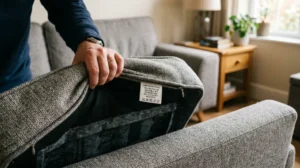
Check the fabric before you reach for any liquid
Somewhere under a cushion or beneath the sofa frame, there’s usually a care label. It’s worth finding before you do anything else.
| Code | What it generally means | Safer approach |
|---|---|---|
| W | Water-based cleaning may be suitable. | Use minimal moisture and test first |
| S | Solvent-based cleaning is required | Don’t use a homemade water solution |
| W/S | Either method may be permitted. | Follow the care instructions carefully |
| X | Vacuuming or specialist care only | Avoid liquid stain treatment at home |
These codes are a guide, not a guarantee. Fabric colour, age, whatever’s been done to it before, the backing material and even the cushion filling all play a part. Pakistan’s National Vocational and Technical Training Commission specifically recommends fabric specific care and testing any stain removal product before you use it properly.
Before touching the visible mark, test your solution somewhere hidden first. Let it dry fully. If the colour shifts, the fabric goes stiff, or a ring shows up, stop right there.
A cautious home method for water safe fabric
If your sofa’s confirmed water safe, here’s what you’ll need.
- Two cups of cool or lukewarm water
- A few drops of mild, clear dishwashing liquid
- One clean white cloth for treatment
- One separate cloth for rinsing
- One dry towel for absorption
Stay away from coloured detergents, strong bleach, bathroom cleaners and undiluted vinegar. They can leave residue behind or mess with the sofa’s colour entirely. You’ll find plenty of guides online pushing a vinegar mix, but it’s not something that works safely on every upholstery type. Test it hidden first, always.
Dampen your cloth and wring it out well. It needs to be moist, not dripping. Start at the outer edge of the mark and dab your way toward the centre, switching to a clean part of the cloth as the tea transfers over. Don’t soak the cushion. Extra water travels into the foam and creates a bigger drying headache than the stain ever was.
Once the mark’s faded, take a second cloth barely dampened with plain water and lift away any soap residue. Blot again, don’t rub. Finish with a dry towel pressed over the spot.
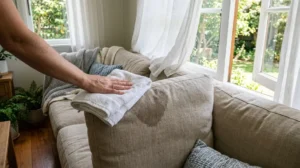
Drying matters more in Lahore than most places
Don’t sit on the treated section until it’s fully dry. Moisture trapped in the foam can turn musty, and in humid conditions that’s a real path toward mould.
Lahore’s weather makes drying time genuinely unpredictable.
Dry weather
Open a window if the outdoor air’s reasonably clean. Airflow does most of the work here.
Monsoon season
Use a fan or basic ventilation. Skip anything with intense heat close to the fabric, it does more harm than good.
Smog days
Keep windows closed for long stretches when air quality outside is poor. You don’t want that settling into a damp cushion.
Load shedding
If a power cut’s expected, don’t start a wet cleaning process you won’t be able to dry properly. Wait for a better window.
Only remove cushion covers if the care label actually allows machine washing. Lahore deals with serious smog and heavy airborne pollution for long stretches of the year, and local reporting has pointed to wet or mechanical cleaning replacing dry sweeping specifically to cut down dust. That’s exactly why controlled moisture and proper drying matter so much here.
What about a stain that’s already old?
An old stain isn’t just tea anymore. It’s dried milk, sugar, dust and probably residue from an earlier cleaning attempt, all sitting in the fibres together. Keep adding more liquid and you risk a pale ring forming around the original mark, or pushing the whole thing deeper into the cushion.
For a small, water safe mark, one repeat of the mild blotting process after the first attempt has dried is reasonable. If it’s not responding, stop. Adding more product isn’t the answer.
Professional treatment tends to be the safer call when any of these apply.
- The stain is several days or weeks old
- The sofa is velvet, suede, silk, wool or another delicate material
- The fabric’s marked S or X
- The chai had a lot of milk or sugar in it
- The spill reached down into the foam
- The stain covers a large section
- An earlier cleaning attempt left a ring or discolouration
- The sofa’s rented or expensive enough that replacement isn’t an option
A proper sofa cleaning service in Lahore will inspect the fabric, pre treat the mark, use controlled agitation and extract the moisture with the right equipment. Local providers describe specialised stain treatments and extraction based upholstery cleaning, but no method can honestly promise removal from every fabric or every old stain. Some claims online oversell what’s actually possible.
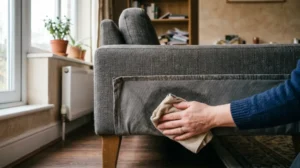
Common mistakes worth avoiding
- Scrubbing aggressively with a brush
- Pouring a glass of water straight onto the stain
- Using bleach on coloured upholstery
- Applying hydrogen peroxide without a hidden area colour test
- Mixing several cleaning chemicals together
- Using a hot iron or a very hot hairdryer to speed up drying
- Covering the damp section with a cushion
- Applying baking soda paste to fabric that can’t tolerate water
- Cleaning only the centre when a visible water ring’s already formed
DIY works fine for a fresh, small spill on water safe fabric. Professional cleaning becomes the better trade off once the sofa is delicate, heavily soiled, badly stained, or the weather makes proper drying difficult right now. If dust and fabric wear are showing up on curtains too, a curtain and blinds cleaning visit in the same booking tackles both at once.
Book help in Lahore
For a fresh, small chai spill, careful blotting is probably all you need. If you’re worried about ruining the fabric, send Pak Cleaners a photo of the sofa, mention the fabric type if you know it, and let us know whether the stain’s fresh or old. Ask about the method, expected drying time and price in PKR before you book anything.
