Hot water extraction cleans deeper and pulls out more soil and allergens, but it takes longer to dry, especially once monsoon humidity settles over Lahore. Dry foam and other low moisture methods dry fast and work well for a light refresh, though they never reach the same depth or lift the same amount of embedded dirt.
What follows is the same method by method comparison I walk clients through on site. How each technique actually works, realistic drying bands for Lahore conditions rather than the generic global numbers you find online, and when one method genuinely beats the other for your home or office.
Quick comparison, hot water extraction versus dry foam
| Feature | Hot water extraction (steam cleaning) | Dry foam or low moisture cleaning |
|---|---|---|
| How it works | Heated solution injected deep into the pile, then extracted with strong suction along with dissolved soil | Foaming detergent worked into the top fibre, then vacuumed once dry or semi dry |
| Cleaning depth | Deep, restorative clean into pile and backing | Surface to mid pile, maintenance level clean |
| Typical drying time, global | 6 to 12 hours with good airflow, up to 24 hours in humid or poorly ventilated rooms | 1 to 4 hours, often under 2 hours for light foam systems |
| Drying time in Lahore monsoon | 12 to 24 hours common, sometimes longer for thick pile or underlay | 2 to 6 hours depending on humidity and carpet thickness |
| Soil and allergen removal | High, removes embedded dirt, pet contamination, and most allergens | Moderate, good for light traffic film and surface dust |
| Residue risk | Low when properly extracted and rinsed | Higher if foam is over applied or not fully vacuumed |
| Best for | Deep cleans, pet homes, allergy sufferers, heavily soiled carpets | Quick refresh between deep cleans, offices needing fast return to service |
How hot water extraction actually works
Hot water extraction, often called steam cleaning, is what most manufacturers and international cleaning standards point to as the real restorative method. On a job, the process runs in a fixed order and skipping a step shows up in the result.
| Step | Action | Why it matters |
|---|---|---|
| 1 | Vacuum thoroughly before any liquid touches the carpet | Stops loose dust and grit turning to mud once water goes down |
| 2 | Pre treat stains and high traffic walkways | Breaks down oil, tea stains, and ground in dirt ahead of extraction |
| 3 | Inject heated solution and extract it immediately | Reaches the backing and lower fibre where most contamination actually hides |
| 4 | Rinse and neutralise if the carpet is heavily soiled | Clears detergent residue and restores the fibre’s natural pH |
| 5 | Groom the pile and set a realistic drying window | Brushes fibre straight and gives an honest timeline based on airflow and humidity |
Hot water extraction sits in the restorative category under international cleaning standards, and it is the method most carpet makers recommend for a periodic deep clean rather than a weekly touch up.
How dry foam cleaning works and where it fits
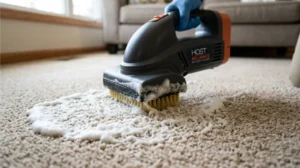
Dry foam and related low moisture methods use a fraction of the water hot water extraction does, which is exactly why offices and busy homes lean on it between proper deep cleans. Loose soil gets vacuumed first, the same as any method, so foam doesn’t turn dust into paste. A foaming detergent then gets worked into the top and mid pile with a brush or machine, and the foam traps soil as it breaks down. Once it dries to a crystalline residue, a final vacuum pass lifts the foam back out along with whatever it trapped. Some systems allow light foot traffic again within 30 to 60 minutes, which is the whole appeal for a space that can’t sit closed for a day.
Think of dry foam as interim maintenance rather than a deep clean. It refreshes appearance and knocks down surface soil, but it was never built to chase down heavy pet staining or dirt that’s worked its way into the backing.
Drying time, the honest Lahore numbers versus the global average
Most global guides quote 6 to 12 hours for hot water extraction and 1 to 4 hours for low moisture methods, and those numbers assume moderate humidity and decent airflow. Lahore’s monsoon months, roughly July through mid September, regularly push relative humidity into the 60 to 76 percent range, with spikes higher right after heavy rain. That kind of humidity slows evaporation enough that the global numbers stop being useful.
| Method | Dry season | Monsoon or high humidity |
|---|---|---|
| Hot water extraction | 6 to 12 hours with fans or AC | 12 to 24 hours, longer for thick pile or wall to wall carpet with underlay |
| Dry foam or low moisture | 1 to 3 hours for light traffic areas | 2 to 6 hours depending on carpet thickness and ventilation |
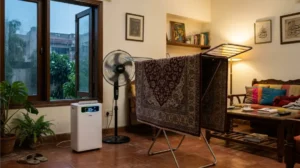
Book hot water extraction during or right after monsoon rains and plan for the longer end of that range. Fans, air conditioning, or a dehumidifier running through the drying window is the single biggest factor in keeping dampness from lasting beyond 24 hours.
Which method actually suits a Lahore home
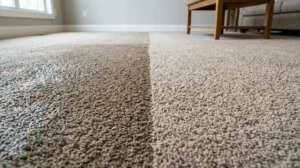
For most households, the answer isn’t picking one method forever, it’s running both on a schedule. Hot water extraction twice a year, ideally right before and after peak smog or monsoon periods, pulls out the embedded dust and allergens that low moisture cleaning was never designed to reach. Dry foam, encapsulation, or bonnet cleaning every two to four months in high traffic areas keeps the surface looking fresh between those deep cleans and genuinely extends how long the deep clean result lasts.
Homes with pets, small children, or allergy sufferers should treat hot water extraction as the main event and dry foam as a top up, never the other way around. If your carpets share a room with a fabric sofa that hasn’t seen attention in a while, it’s usually worth booking a sofa cleaning service in Lahore on the same visit, since dust and smog settle into both surfaces at roughly the same pace.
Offices and commercial carpets, when speed beats depth
Downtime costs money in an office, retail space, or clinic, so low moisture methods often make more practical sense for routine maintenance in those settings. Dry foam or encapsulation gets a floor back to light traffic within one to three hours in dry weather and two to six hours in humid conditions, which barely disrupts a working day. Save hot water extraction for after hours or a weekend, run fans and AC overnight, and plan for the full 12 to 24 hour drying window during monsoon months rather than fighting the clock.
A cycle that works well for a lot of Lahore offices is quarterly low moisture cleaning paired with one or two annual hot water extraction deep cleans, adjusted up if foot traffic is heavy.
DIY mistakes that reduce results and stretch drying time
- Over wetting with a home extractor. Rented units rarely match professional suction, which leaves more water sitting in the pile and underlay and drags drying time out well past what’s normal.
- Using too much foam or shampoo. Excess detergent leaves a sticky residue that pulls in more dust, and foam left unvacuumed stays trapped in the pile instead of lifting out.
- Ignoring airflow and humidity. Cleaning on a humid day with no fan, AC, or dehumidifier running can leave a carpet damp for 24 hours or more, especially during monsoon season.
- Scrubbing in circles with a stiff brush. This frays fibre, leaves uneven clean lines, and wears out high traffic zones faster than ordinary use ever would.
Trained crews control moisture at every stage, use pH balanced detergents suited to the fibre, and extract thoroughly enough that none of this becomes a problem after the crew leaves.
Safety, chemicals, and why trained crews matter
Pak Cleaning Services trains staff on safety protocols for residential and commercial carpet work across DHA, Gulberg, Bahria Town, Model Town, Johar Town, and Cantt. The agents used are non toxic and safe around children and pets when applied as directed, and dilution and pH control get checked before a single pass starts, since guessing here is exactly how colour loss happens on an older wool carpet. Industrial extraction pulls out more moisture than a rented home unit ever could, which keeps the mould and mildew risk down in a climate that already works against you. Staff are also trained to choose between hot water extraction and dry foam based on carpet type, soil level, and the humidity that day, rather than running the same method on every job regardless of conditions.
If you also have a delicate or valuable area rug that needs more care than an in place clean can give it, an area rug washing service with pickup and delivery in Lahore handles the controlled rinsing and drying that a wall to wall carpet method simply isn’t built for.
Choosing the right method for your property
A short assessment before booking saves everyone time and gets you the right method on the first visit.
- Look at your carpet’s actual condition and use. Heavily soiled or pet affected carpet usually calls for hot water extraction, while light traffic film or an office refresh often suits dry foam just fine.
- Check the weather and indoor humidity before you book. During monsoon or very humid days, plan for longer drying with extraction, or lean toward dry foam if you need the space usable the same day.
- Clear the areas to be cleaned. Move small furniture, toys, and loose items, and shift light chairs or side tables so the crew has room to work properly.
- Plan for drying time honestly. For extraction during monsoon months, keep rooms ventilated for 12 to 24 hours and have fans, AC, or a dehumidifier ready.
- Ask for a tailored recommendation rather than a generic quote. Mention your sector, DHA, Gulberg, Bahria, Model Town, Johar Town, or Cantt, so the team can plan around your specific carpets and the day’s weather.
With the right method matched to the right season, carpets stay properly clean through Lahore’s dust, smog, and monsoon stretches without the guesswork over how long the floor will actually take to dry.
